

Elora Tea
Kosabei- Kenya Estate
Kosabei- Kenya Estate
Impossible de charger la disponibilité du service de retrait
An inspiring cup from the Tuscany of Tea! Loaded with regional nuance, tends malty, exceptionally fresh.
HEALTH PROPERTIES: High in anti-oxidants
GRADE: Tippy Golden Flowery Orange Pekoe (TGFOP)
CAFFEINE LEVELS: Medium
TEA SOURCING: Nandi Highlands (Kenya)
THE STORY OF KOSABEI- KENYA ESTATE
Interestingly, the story of Kosabei estate TGFOP (Tippy Golden Finest Orange Pekoe), perhaps one of the finest teas produced in Kenya, actually begins in Assam, far up in the Himalayan foothills in North Eastern India. During the 19th century, long before tea was ever plated in Kenya, (rumored to have been in 1903), British planters had been clearing jungle and producing teas for the London auction up in Assam. The early planters lived in extreme isolation, often weeks upriver from the nearest town. Subsequently, they had a lotof time on their hands. What time they did not devote to hanging about the local “club” playing backgammon was spentexperimenting with new ways to manufacture finished tea. At the time, most of the world‟s teas were produced in China, acountry known for keeping a tight lid on production secrets. Initially, the early Assam planters attempted to mimic the better- known Chinese tea grades – i.e. Assam Hyson, Assam Congou, etc. Over the years, as the result of all their experimentation, the Assam planters developed many new grades and styles of finished leaf leading to the classification system we know today -OP (Orange Pekoe), FBOP (Flowery Broken Orange Pekoe), GBOP (Golden Broken Orange Pekoe), TGFOP (Tippy Golden Finest Orange Pekoe), etc.
Now, where does the Kenyan connection come into play? One of Assam‟s early planters was a man by the name of George Williamson. Williamson‟s excellent business acumen and knack for growing and manufacturing exceptional teas soon caughtthe attention of the London auction houses and his company grew into one of the largest and best-run private tea companies inthe world. During their many years growing tea in Assam, George Williamson‟s perfected the art of the tea world‟s finergrades, among them, TGFOP – Tippy Golden Flowery Orange Pekoe. During the early part of the new millennium, GeorgeWilliamson‟s moved their business from Assam to Kenya, bringing their tea expertise with them and ushering in a new era ofKenyan production.
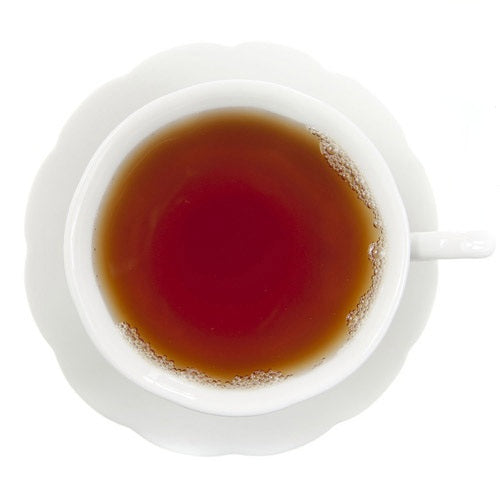
Until the arrival of Williamson‟s in Kenya, most Kenyan teas produced for the export market were CTC production, the resultof the fact that Kenya‟s industry came of age during the 20th century, a decidedly more mechanized age than the 19th. Recognizing the exceptional quality of seasonal Kenyan leaf, Williamson‟s decided to experiment with some of the moretraditional Orthodox leaf styles they had manufactured back in Assam. The result is some of the finest, most flavory teas to be found anywhere on Earth. One of these, Kosabei TGFOP is quite simply an outstanding tea , at once light and profound, gentleand astringent with notes of malt, currant and moist earth. Like all good Kenyan‟s this tea makes an excellent self-drinker but also takes milk extremely well.
BREWING INSTRUCTIONS
BREWING INSTRUCTIONS FOR HOT TEA: Infuse one slightly heaping teaspoon for each 8 ounce cup with boiling water for 3-7 minutes.
Infuse 6 slightly heaping teaspoons of tea with 1 1/4 cups of boiling water for 5 minutes. Quarter fill a serving pitcher with cold water, and add the infused tea, straining the leaves, to the pitcher. Add ice and top-up the pitcher with cold water. Add lemon and sweeten to taste. A rule of thumb when preparing fresh brewed iced tea is to increase the strength of hot tea since it will be poured over ice and diluted with cold water.
Infuse 1 slightly heaping teaspoon of loose tea with 6 ounces of boiling water for 5 minutes. Add the tea to a 12 ounce glass, filled with ice, straining the leaves. Add hot tea to a 12oz/375ml acrylic glass filled with ice, straining the tea or removing the bags. Add lemon and sweeten to taste.
NUMBER OF CUPS: 15-20 cups from each 50 grams of tea, with a single use of the leaves. Loose leaf tea is traditionally infused 3 times, with a different flavor profile following each infusion. Accordingly, each 50 gram bag can make up to 60 cups of tea.
Partager